
Material Properties That Make Titanium CNC Machining Unique
Titanium’s appeal in CNC machining comes from its extraordinary strength-to-weight ratio, high corrosion resistance, and ability to perform well at elevated temperatures — making it ideal for aerospace, medical, and performance automotive parts. Its density (~4.51 g/cm³) is about 60 % that of steel while offering comparable strength, which helps designers reduce weight without sacrificing performance. Industrial usage often demands tight tolerances (±0.01 mm or better) and complex geometries that CNC machining can deliver.
However, these desirable traits also create machining challenges — which we’ll explore in detail below — making titanium one of the harder materials to machine efficiently compared with aluminum or steels.
The Most Common Grades Used in CNC Machining
Titanium comes in various grades, and the choice impacts both performance and machinability:
| Grade | Composition | Typical Use |
|---|---|---|
| Grade 2 | Commercially pure titanium | Corrosion-resistant parts, heat exchangers |
| Grade 5 (Ti-6Al-4V) | Alloy with aluminum & vanadium | Aerospace structural parts, implants |
| Grade 23 (Ti-6Al-4V ELI) | Extra low interstitial version of Grade 5 | Medical implants, surgical tools |
Grade 5 is the most widely used because it balances strength and workability, but it is more challenging to machine than Grade 2. Grade 23 is favored for biocompatibility, making it essential for medical applications.
Why Titanium Is Difficult to Machine (Thermal and Mechanical Challenges)
Titanium’s physical and thermal properties cause several machining challenges:
-
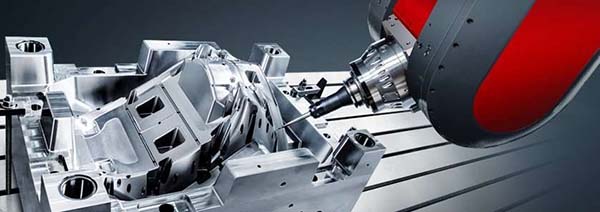
Low Thermal Conductivity: Titanium does not conduct heat efficiently, so heat generated stays near the cutting zone. This rapid heat accumulation leads to tool wear, workpiece distortion, and surface finish problems.
-
High Strength & Cutting Forces: The metal’s strength means the cutting tool experiences high resistance, increasing force and power consumption.
-
Low Elasticity (Modulus): Titanium can flex under cutting load, producing chatter and dimensional inaccuracies, especially with thin-walled parts.
Together, these properties demand specialized machine setups, careful feed/speed control, and rigid fixturing to maintain precision and surface quality.
Heat Management: Coolants, Cryogenic Methods, and Tool Life
Because titanium traps heat at the cutting interface, heat control is essential:
-
High-Pressure Coolants: Delivering coolant at 70–100 bar (1,000 + PSI) directly to the cutting zone is common practice.
-
Cryogenic Cooling: Some shops use liquid nitrogen cooling to maintain lower temperatures, reduce tool wear, and improve surface finish.
-
Tool Selection and Coatings: Carbide tools with TiAlN or AlCrN coatings resist high temperatures and chemical attack, lengthening tool life.
Poor heat management not only shortens tool life but can cause built-up edge, galling (material sticking to the tool), or even part distortion.
Tool Wear: Why It Happens and How to Mitigate It
Titanium is notorious for accelerated tool wear due to its combination of high strength and poor thermal conductivity. Heat builds quickly and concentrates at the cutting edge, leading to:
-
Abrasive wear: Rubbing against the hard material.
-
Chemical wear & galling: Titanium bonding to tool surfaces.
Tool wear increases the need for frequent tool changes, raising cost and cycle times. Best practices include using coated carbide tools with TiAlN or DLC layers and monitoring tool condition so inserts are replaced before failure occurs.
Chip Control and Evacuation Strategies
Effective chip control is crucial when machining titanium:
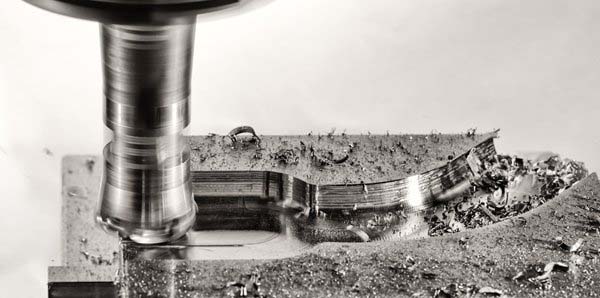
Because chips are hot and difficult to evacuate, they can trap heat at the cutting zone or damage finished surfaces if they are not removed. Using chip breakers, high-pressure coolant to flush chips, and optimized feed rates helps prevent chip accumulation, minimize heat, and protect both tools and surfaces.
Designing Titanium Parts for Machinability
Good design reduces machining time and risk:
-
Avoid excessively thin walls (< 1 mm). These can flex and chatter.
-
Use fillets (≥ 0.5 mm) instead of sharp corners.
-
Ensure clear paths for chip evacuation.
-
Minimize deep blind holes (≤ 6 × diameter where possible).
Designing with manufacturability in mind not only improves part quality but significantly reduces CNC cycle time and tool wear.
Precision Tolerance and Surface Integrity Challenges
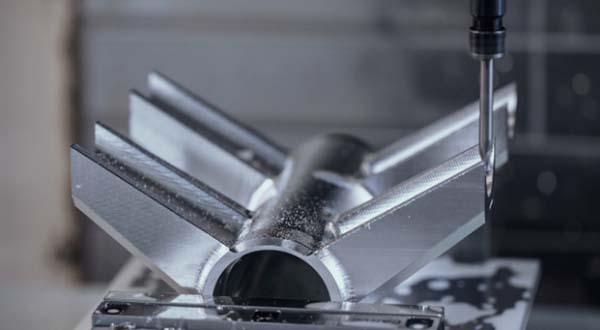
Titanium parts often demand tight dimensional tolerances (e.g., ±0.001″ or ±0.01 mm) for critical functions. However, heat, springback, and vibration can make maintaining these tolerances difficult without:
-
Rigid workholding and fixtures
-
Optimized feeds & speeds
-
Regular inspection with CMM and surface roughness measurement
Rough machining followed by finishing passes and controlled tool paths help prevent residual stresses, micro-cracks, and surface hardening that compromise performance.
Cost Considerations Specific to Titanium CNC Machining
Titanium CNC machining tends to be more expensive than machining aluminum or steel due to:
| Cost Factor | Reason |
|---|---|
| Raw Material | Titanium costs ~$15–35/lb vs steel ~$2–5/lb. |
| Cycle Time | Slower feeds and lower surface feet per minute due to heat concerns. |
| Tool Wear | Tools wear out 3–5× faster than with aluminum. |
| Complex Fixturing | Needed to stabilize low-elasticity material. |
Machining titanium typically costs 2–3× more per hour than comparable steel operations due to these factors.
Post-Machining Surface Finishing Options
After machining, surface treatments improve durability, corrosion resistance, and aesthetics:
-
Polishing and bead blasting
-
Anodizing or PVD coatings
-
Electrophoresis or chrome plating
Surface finishing is often essential for medical implants and aerospace parts that require both function and aesthetic integrity.
Why Xstar Is the Right Partner for Titanium CNC Machining
Titanium CNC machining is a specialized discipline that demands deep expertise, precise tools, and meticulous process control. Xstar is a trusted provider of titanium CNC machining services because:
-
Engineering support for optimal design and material choice
-
Expert thermal management and cutting parameter optimization
-
Coated tooling strategies to maximize tool life
-
Stringent precision standards and quality inspection
-
Efficient, cost-transparent machining workflows for prototype to production
From aerospace brackets to medical implants, Xstar combines material science and machining excellence to reliably deliver titanium parts that perform under demanding conditions.
Some content in this article is sourced from the internet. If there is any inappropriate content, please contact us for removal.
