
Comprehensive Guide to Titanium CNC Machining from A to Z
Understanding the Challenges Behind Titanium CNC Machining
Working with titanium CNC machining can be demanding due to the material’s unique characteristics. Titanium is significantly stronger than many industrial metals—such as stainless steel—yet its difficulty doesn’t come solely from strength. Because titanium has very low thermal conductivity, heat generated during machining is not dissipated quickly. As a result, heat concentrates in the cutting zone, accelerating tool wear and raising the risk of workpiece deformation.
In addition, titanium tends to work-harden and shows strong chemical reactivity with cutting tools, making machining even more complex. Still, with proper techniques and the right equipment, titanium machining is absolutely achievable. Due to their reliability and robustness, CNC-machined titanium parts are frequently used in aerospace systems, where precision and strength are critical.
Getting Started with Titanium CNC Machining
This guide outlines the essential information you need when working with titanium—one of the premium metals offered through Xstar’s advanced CNC machining services. You’ll learn about the advantages of CNC titanium machining, its core applications across industries, and expert design and manufacturing practices that improve performance, efficiency, and quality.
Xstar produces titanium CNC parts with exceptional speed and accuracy, powered by intelligent AI-driven design-for-manufacturability (DFM) analysis combined with expert engineering review. Users can upload CAD files through the platform for an instant quote and receive real-time DFM insights to optimize their designs.
Benefits and Applications of CNC Titanium Machining
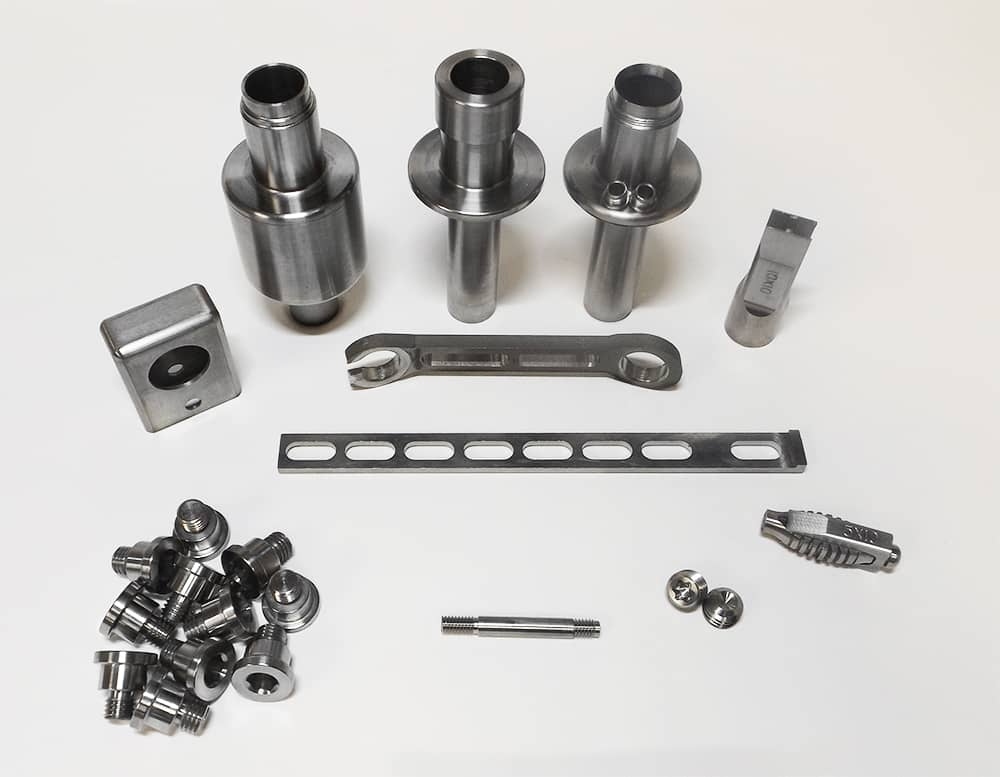
CNC-machined titanium parts offer outstanding durability, impressive strength-to-weight ratio, excellent corrosion resistance, and natural biocompatibility. These properties make titanium a preferred choice in several high-performance sectors:
Aerospace
Aerospace remains the largest consumer of titanium. Common titanium CNC parts include turbine components, aircraft seat structures, valves, shafts, and oxygen system parts. The combination of lightweight properties and strength enables more efficient aircraft design.
Automotive
Automotive manufacturers use titanium to reduce overall vehicle mass and improve fuel efficiency. Titanium components such as piston pins, retainers, valve springs, and brake caliper pistons significantly enhance performance due to their reduced weight and superior heat resistance.
Medical & Dental
Titanium’s biocompatibility makes it ideal for medical implants and surgical devices. CNC processes are used to produce bone screws, spinal rods, orthopedic pins, dental implants, and major joint replacement components. Special surface treatments improve titanium’s bioactivity, supporting better integration within the body.
Marine & Naval
Titanium’s corrosion resistance is crucial in saltwater environments. Machined components include propeller shafts, desalination equipment, underwater robotics parts, heat exchangers, and subsea extraction tools.
Economic Factors to Consider
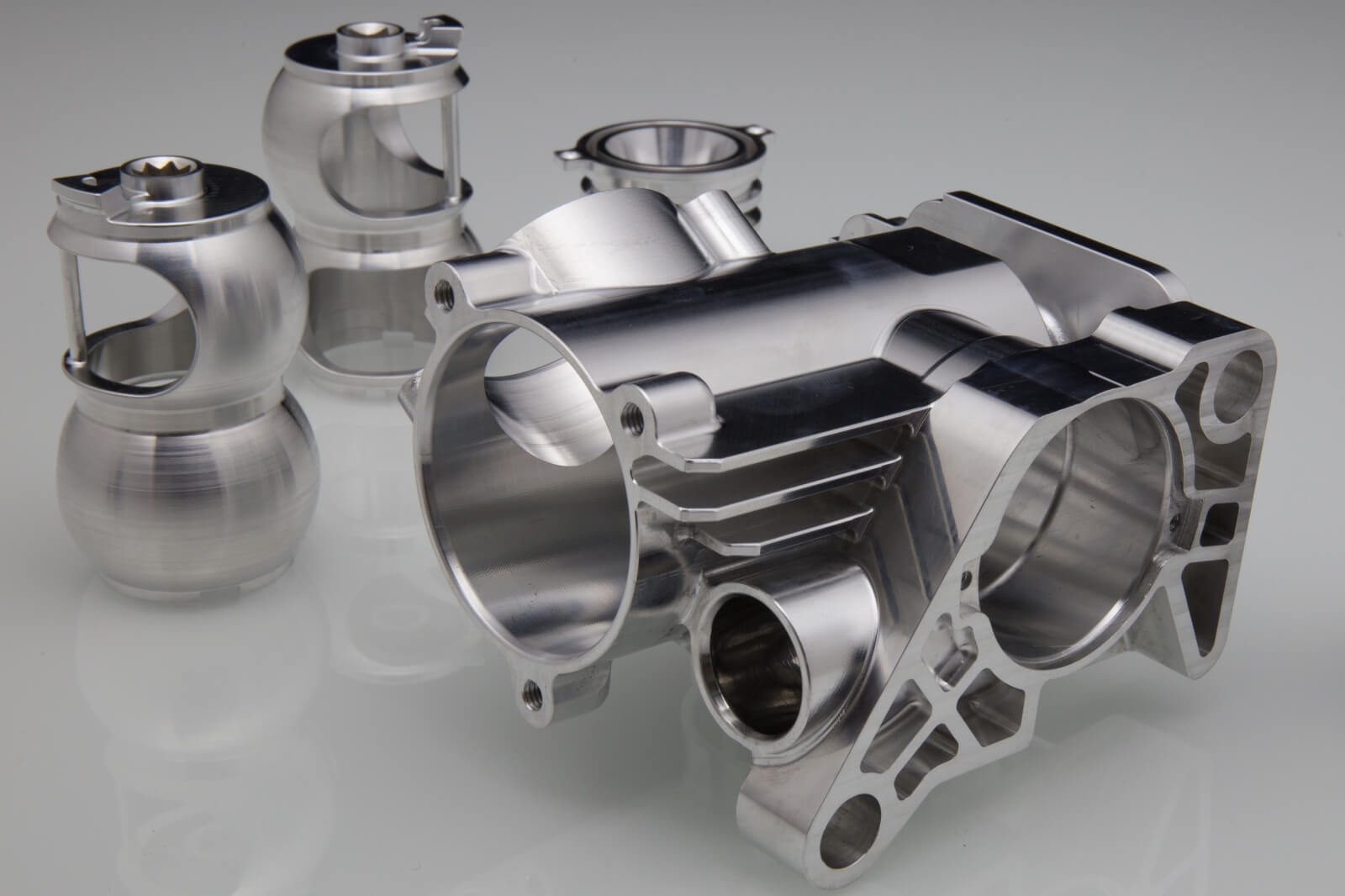
Titanium is more expensive than many metals due to strict quality standards and rising global demand. When planning titanium machining projects, consider the checklist below:
-
Compare titanium prices with alternative materials
-
Estimate tooling costs and initial investment
-
Review all factors influencing machining time
-
Create cost optimization strategies
-
Evaluate labor requirements and operator expertise
-
Monitor energy consumption and look for efficiency improvements
-
Assess coolant and lubricant usage and associated costs
-
Implement waste management and recycling methods
-
Consider long-term savings due to titanium’s durability
-
Conduct ROI and break-even analysis
Designing Effective Parts for Titanium CNC Machining
Because titanium is costlier than other metals, precise and efficient part design is essential. Good planning helps reduce machining time, limit waste, and avoid unnecessary complexity. Reliable design involves CAD/CAM software, proper fixtures and jigs, and thorough DFM practices.
CAD/CAM Software for Titanium Machining
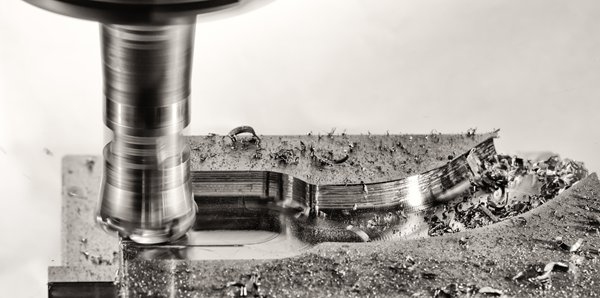
Use CAD for accurate part modeling and CAM software to generate toolpaths tailored for titanium machining. Simulation tools such as ANSYS help validate design integrity before cutting begins. Titanium requires toolpaths that carefully manage temperature and cutting forces, making proper CAM programming essential for maintaining part quality and tool life.
Fixture and Jig Design
Titanium machining demands strong, stable fixturing. Support systems must be rigid enough to handle machining forces without deflection or vibration. A well-designed fixture ensures dimensional precision and minimizes tool breakage. Designers who understand fixture requirements can create parts that are easier and more cost-effective to produce.
Design for Manufacturability (DFM)
Applying DFM principles ensures smoother production and better machining results. When designing titanium parts:
-
Simplify overly complex geometries
-
Use uniform wall thickness
-
Incorporate larger radii
-
Avoid deep or narrow pockets
Xstar provides integrated DFM feedback with every quote request, enabling designers to optimize their titanium parts before production.
Selecting Titanium Alloys and Grades
Titanium is available in many grades—from commercially pure titanium (Grades 1–4) to advanced titanium alloys (Grade 5 and above). Each grade offers distinct mechanical and chemical properties. Understanding these differences helps you choose the right material for your CNC titanium machining project.
Overview of Common Titanium Grades for CNC Machining
Titanium materials vary widely in strength, formability, corrosion resistance, and machinability. Below is a rewritten summary of common titanium grades frequently used in titanium CNC machining.
Grade 1
Commercially pure titanium with low oxygen content.
Properties: Excellent corrosion resistance, high toughness, easy to machine, but lower in strength.
Applications: Heat exchangers, desalination equipment, chemical processing, automotive components, airframe parts, medical devices.
Grade 2
Most common commercially pure grade.
Properties: Higher strength than Grade 1, strong corrosion resistance, good ductility, good machinability.
Applications: Marine components, aircraft engines, hydrocarbon processing, medical equipment.
Grade 3
Medium oxygen content.
Properties: Higher strength, good corrosion resistance, moderate machinability.
Applications: Aerospace, marine systems, medical parts.
Grade 4
Strongest of the commercially pure grades.
Properties: Excellent corrosion resistance, more difficult to machine, requires slow speeds and high coolant flow.
Applications: Cryogenic vessels, heat exchangers, hydraulics, high-strength airframe components.
Grade 5 (Ti-6Al-4V)
The most widely used titanium alloy.
Properties: High strength, excellent corrosion resistance, poor machinability.
Applications: Aerospace structures, power generation, marine components, medical implants.
Grade 6 (Ti-5Al-2.5Sn)
Properties: Stable at high temperatures, good weldability, mid-range strength.
Applications: Rocket propulsion systems, jet engine components, space vehicles.
Grade 7 & Grade 11
Commercially pure titanium with palladium.
Properties: Superior corrosion resistance, excellent weldability, lower strength.
Applications: Chemical processing and desalination systems.
Grade 12
Alloy with molybdenum and nickel.
Properties: High-temperature strength, great weldability.
Applications: Hydrometallurgy, aircraft, marine heat exchangers.
Grade 23 (ELI Ti-6Al-4V)
A refined version of Grade 5 with extra-low interstitials.
Applications: Orthopedic screws, surgical staples, medical implants.
CNC Machining Processes for Titanium
Titanium parts can be produced through various CNC operations, each with distinct benefits:
Milling
Rotating cutters remove material to achieve precise shapes. For titanium CNC machining, maintaining proper coolant flow and balanced speeds is essential to avoid tool wear.
Turning / Lathing
A rotating workpiece with a fixed tool is used for cylindrical components. Rigidity is crucial to reduce vibration and improve surface quality.
Drilling & Boring
Drilling produces accurate holes; boring enlarges or finishes holes to tighter tolerances. Titanium’s hardness requires very sharp tools and careful heat control.
5-Axis Machining
5-axis equipment enables complex geometries with fewer setups. This method is especially valuable for aerospace and medical parts, where precision is critical.
Future Trends
AI-supported toolpath optimization and hybrid manufacturing (combining additive + subtractive methods) are set to significantly improve titanium machining efficiency.
Setting CNC Machining Parameters
Cutting Speeds & Feed Rates
To limit overheating, lower cutting speeds combined with higher feed rates are recommended. Tool coatings such as TiAlN or TiCN offer superior heat resistance. Typical surface speed:
60–100 ft/min (18–30 m/min) depending on titanium grade and tooling.
Machining Tolerances
Titanium’s reactivity and heat sensitivity make tight tolerances more challenging. Use rigid fixtures, shorter tools, and stable setups to avoid deflection.
Coolant Use
High-pressure coolant streams prevent heat buildup and remove chips. Use high-lubricity coolants designed for difficult metals to increase tool life.
Additional Strategies for Better Machining
-
Adjust spindle speeds + feed rates
-
Use deeper axial cuts and smaller radial engagement
-
Optimize toolpath to reduce heat concentration
Safety Recommendations
Titanium machining requires strict safety protocols:
-
Wear proper PPE
-
Conduct routine equipment maintenance
-
Follow correct tool handling practices
-
Prevent fire hazards (titanium dust is flammable)
-
Dispose of chips and coolants safely
-
Train operators thoroughly
Surface Finishing Options for Titanium CNC Parts
Finishing enhances appearance, performance, and corrosion resistance. Common treatments include:
-
Polishing
-
Bead blasting
-
Anodizing
-
Brushing
-
Chroming
-
PVD coating
-
Powder coating
-
Electrophoresis
Industry Standards and Certifications
Titanium components must meet strict quality standards, especially in aerospace and medical applications.
ASTM Standards
-
ASTM B265 – Titanium sheet/plate
-
ASTM F136 – Ti-6Al-4V ELI for implants
-
ASTM F1472 – Ti-6Al-4V for surgical use
ISO Standards
-
ISO 5832-2 – Unalloyed titanium for implants
-
ISO 5832-3 – Ti-6Al-4V surgical alloy
SAE Standards
-
SAE AMS 4911 – Titanium alloy 6Al-4V sheet and plate
Common Certifications
-
ISO 9001 – Quality Management
-
AS9100 – Aerospace Quality
-
ISO 13485 – Medical Device Manufacturing
Why Choose Xstar for Titanium CNC Machining
Xstar provides high-precision titanium CNC machining services and a range of secondary processes such as finishing and inspection. With rapid production, expert DFM support, and reliable quality systems, Xstar delivers robust solutions for industries requiring exceptional performance and fast turnaround.
We are an integrated trading and manufacturing company specializing in CNC machining services, mainly focused on contract CNC production and the machining of various metal components. As a dedicated supplier offering titanium cnc machining products, titanium cnc machining manufacturers, and titanium cnc machining price information, we deliver dependable and precise engineering solutions.
Our capabilities include the machining of a wide range of materials, such as aluminum extrusion CNC machining, stainless steel CNC machining, magnesium alloy CNC machining, acrylic CNC machining, ABS CNC machining, and plastic CNC machining. We also support advanced production for robot component machining, aerospace parts machining, automotive parts machining, medical parts machining, industrial equipment, and many other precision component applications.
Our CNC machining services offer high accuracy, fast turnaround, stable quality, and excellent versatility across different project needs. We provide a wide selection of post-processing options, including sandblasting, hard anodizing, micro-arc oxidation, grinding, polishing, painting, blackening, electroplating, vacuum plating, chemical plating, phosphating, passivation, silk-screen printing, and texture finishing.
As a professional CNC machining service provider, we support both prototype and mass-production CNC manufacturing. For inquiries about CNC machining service pricing or custom project requirements, please feel free to contact us.
Some content in this article is sourced from the internet. If there is any inappropriate content, please contact us for removal.
