
10 Key Knowledge Points & Topics for Stainless Steel Parts Manufacturers
-
Material Grades & Selection (304, 316, Duplex, etc.)
-
Manufacturing Processes (CNC machining, casting, forming, welding)
-
Precision & Tolerance Standards
-
Surface Finishes & Functional Coatings
-
Industry Applications for Stainless Steel Parts
-
Quality Control & Certifications (ISO standards)
-
Supply Chain & Raw Material Sources
-
Design for Manufacturability (DFM) Tips
-
Cost Factors & Pricing Structures
-
Lead Times & Production Scalability
Material Grades & Selection
Stainless steel parts manufacturers must start with the right material grade, as this determines corrosion resistance, strength, machinability, and cost. Stainless alloys are defined by at least 10.5% chromium, which creates a protective oxide layer against rust and corrosion.
Common grades include 304 and 316 for general and corrosive environments; 17-4 PH for higher strength; ferritic or martensitic steels for magnetic properties or higher hardness.
| Grade | Key Property | Typical Application |
|---|---|---|
| 304 | Excellent corrosion resistance | Food equipment, fasteners |
| 316 | Best chloride resistance | Marine, chemical plants |
| 17-4 PH | High strength | Aerospace, high-stress parts |
| Duplex | Balanced strength & corrosion | Oil & gas, pipelines |
Selecting the appropriate grade early avoids costly redesigns later and ensures the part performs reliably in its intended operating environment.
Manufacturing Processes
Stainless steel part production spans several manufacturing methods, chosen based on design complexity and volumes:
-
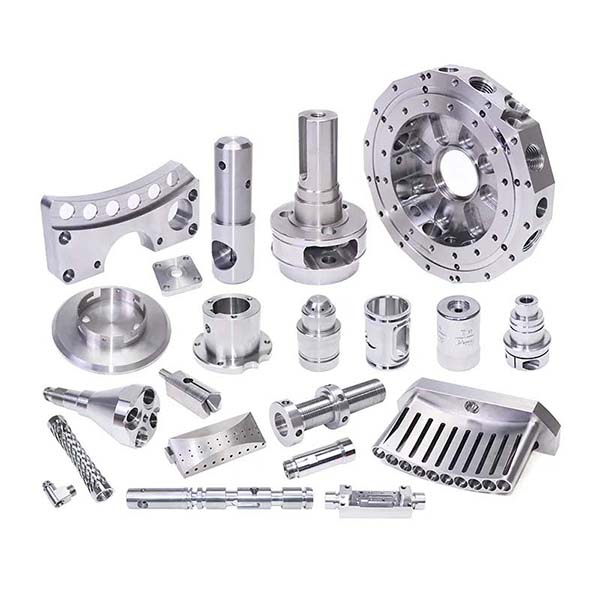
CNC Machining: Precision turning, milling, drilling of bars, billets or forgings to exact designs.
-
Casting: Ideal for complex shapes where machining alone is inefficient.
-
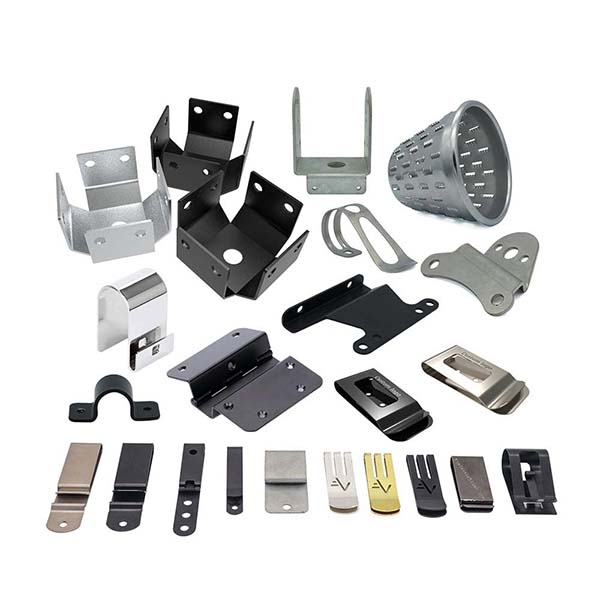
Forming & Stamping: Sheet or strip steel shaped into parts like brackets or housings.
-
Welding & Assembly: Joining complex assemblies from multiple components.
Modern manufacturers often combine multiple methods (e.g., casting + CNC) to balance cost and accuracy. Tight processes ensure consistent repeatability, especially in industries like medical or aerospace where part failure is unacceptable.
Precision & Tolerance Standards
Precision tolerances are critical for fit and function, particularly in sectors like aerospace, automotive, and medical. High-end CNC machining shops routinely hold tolerances down to ±0.002″ (±0.05 mm) or better for critical features.
| Feature | Typical Tolerance |
|---|---|
| Hole diameter | ±0.002″ |
| Flatness | ±0.001″ |
| Surface location | ±0.005″ |
Less critical dimensions can be relaxed to reduce cost. Manufacturers use precise inspection instruments (CMMs, gauges) to verify parts before delivery, which removes guesswork and improves assembly success rates.
Surface Finishes & Functional Coatings
Surface treatment isn’t just cosmetic — it affects corrosion resistance and cleanability. Stainless steel finishes range from mill finishes (raw, unrefined surface) to high-polish mirror looks.
Common finishes include:
-
Brushed or Satin: A controlled directional finish for aesthetics and scratch resistance.
-
Electropolish: Removes micro-imperfections while enhancing corrosion resistance.
-
Passivation: Chemical treatment to reinforce chromium oxide protection.
For hygienic applications like food and medical devices, smoother finishes (e.g., < 0.8 µm Ra) are often specified to prevent bacterial buildup.
Industry Applications for Stainless Steel Parts
Stainless steel parts are essential across a wide range of industries. Key applications include:
-
Medical & Healthcare: Surgical tools, implants, sterilizable instruments.
-
Automotive & Transportation: Exhaust components, brackets, fuel system parts.
-
Food & Beverage: Mixers, valves, processing tanks.
-
Aerospace: Engine mounts, structural brackets.
-
Construction & Architecture: Cladding, railings, decorative hardware.
Each application imposes specific requirements — for example, food-grade surfaces must be easy to sanitize, while aerospace parts must meet stringent strength-to-weight ratios.
Quality Control & Certifications
Top stainless steel parts manufacturers adhere to quality systems like ISO 9001, ISO 13485 (medical), or AS9100 (aerospace). These quality standards require documented procedures, traceability, and inspection reports on every batch.
Typical quality controls include:
-
Incoming material verification: Certificates of compliance for grades.
-
In-process inspection: Tool offsets, in-machine probes.
-
Final inspection: Coordinate measuring machines (CMM).
-
Documentation: Traceability and certification packs included with shipments.
Strict quality systems reduce field failures and improve customer confidence — especially for regulated industries.
Supply Chain & Raw Material Sources
Before parts are even machined, stainless steel must be produced and supplied as billets, bars, plates, or coils. Major stainless manufacturers like Acerinox and VDM Metals operate globally, delivering corrosion-resistant alloys for further fabrication and machining.
The stainless supply chain typically includes:
-
Melt Mills: Form steel from raw ore and recycled scrap.
-
Service Centers: Stock and cut bar, sheet, plate.
-
Machining & Fabrication Shops: Produce finished parts.
Choosing the right source — one that provides certified, traceable materials — is essential for quality and compliance.
Design for Manufacturability (DFM) Tips
Good design greatly reduces manufacturing costs and improves part performance. Key DFM recommendations for stainless parts include:
-
Avoid overly tight tolerances on non-critical features to reduce machining time.
-
Simplify geometry where possible to minimize setups and reduce cycle times.
-
Design with standard stock sizes to reduce material waste.
For example, aligning holes and slots with standard tool diameters cuts tool changes, reduces errors, and speeds production — all without compromising part quality.
Cost Factors & Pricing Structures
Pricing for stainless steel parts depends on multiple variables:
-
Material cost: Exotic grades cost more due to alloying elements.
-
Complexity: Features like deep pockets or thin walls increase machining time.
-
Tolerance tightness: High-precision parts cost more due to inspection and slower feeds.
-
Finish requirement: Polished finishes or coatings add labor and time.
Manufacturers often break pricing into material + machining + finishing + inspection + logistic costs. Educated sourcing teams compare quotes based on these transparent components to avoid surprises.
Lead Times & Production Scalability
Stainless steel parts manufacturers balance speed and quality. Typical lead time scenarios include:
-
Prototyping: 3–10 days depending on geometry and finish.
-
Small batches: 1–3 weeks.
-
Larger runs: Longer based on volume and capacity.
Scalability depends on machine capacity, tooling availability, and supplier relationships. Lean manufacturers communicate realistic delivery early, reducing risk of delayed product launches.
Why Xstar Is Your Premium Stainless Steel Parts Partner
When sourcing stainless steel parts that demand precision, durability, and consistent quality, Xstar delivers on every front:
-
Expert material guidance — helping you choose grades like 304, 316, or duplex based on your application.
-
Advanced manufacturing — CNC machining, precision casting, and finishing workflows tailored to your design.
-
Robust quality systems — all parts backed by inspection reports and certifications.
-
Transparent pricing and lead times — no surprises, with detailed cost breakdowns.
-
Scalable production capability — from prototypes to full-scale programs.
Whether you’re building medical devices, automotive subcomponents, or industrial equipment, Xstar combines engineering expertise and production excellence to exceed expectations.
Some content in this article is sourced from the internet. If there is any inappropriate content, please contact us for removal.
