
Precision Ceramic CNC Machining Services | XSTAR Technical Ceramics
Why Ceramic CNC Machining Matters for High-Performance Parts
In today’s advanced manufacturing world, ceramic CNC machining has become a critical solution for parts that demand extreme hardness, high temperature resistance, and excellent chemical stability. Unlike metals, ceramics offer unique advantages — but machining them requires special expertise and tools. At XSTAR, our precision CNC machining services include ceramic machining to support industries like aerospace, electronics, medical, and more.
What Is Ceramic CNC Machining?
Ceramic CNC machining is a specialized form of subtractive manufacturing where computer-controlled machines (mills, drills, grinders) shape technical ceramics into precise parts. Due to the brittle nature of ceramic materials, the ceramic machining process often relies on diamond-coated tools, slow feed rates, and high spindle speeds to avoid chipping or cracking.
Common ceramic materials include alumina (Al₂O₃), silicon carbide (SiC), silicon nitride (Si₃N₄), zirconia, and machinable glass ceramics. The machining processes might involve milling, drilling, grinding, lapping, and polishing — often with ultra-precision finishing to meet tight tolerances.
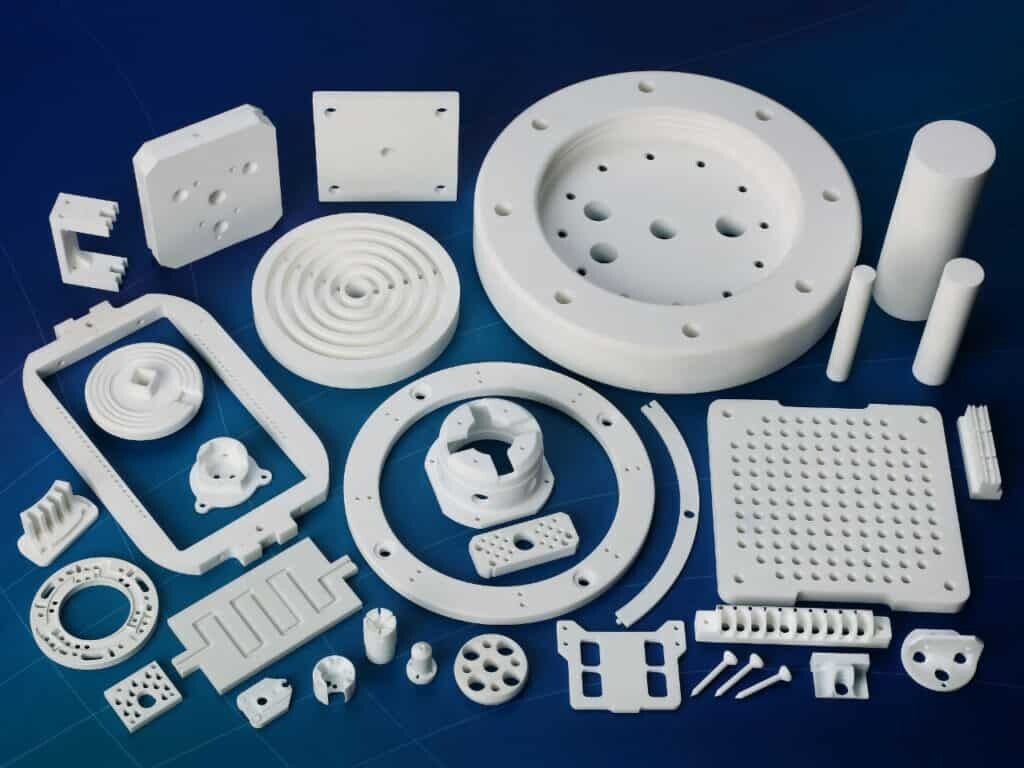
Key Advantages of Ceramic CNC Machining
-
High Hardness and Wear Resistance
Ceramics are extremely hard — harder than many metals — which makes them very wear-resistant. When machined correctly, ceramic parts can last far longer under conditions that would degrade metals. -
Thermal & Chemical Stability
Many ceramic materials withstand very high temperatures (for example, alumina can remain stable up to ~1600°C) and are chemically inert. This is ideal for high-temperature or corrosive environments. -
Electrical Insulation or Conductivity
Depending on the ceramic, parts can act as electrical insulators (e.g., alumina) or even conduct (e.g., doped ceramics) when needed. -
Precision & Repeatability
High-quality ceramic CNC machining services deliver excellent precision and repeatability. Advanced CNC machines and diamond tooling enable micron-level tolerances. -
Excellent Surface Finishes
After machining, ceramic parts often undergo grinding, lapping, or polishing to achieve very fine surface finishes. These finishing steps help minimize stress concentrations and improve part performance.
Challenges in Ceramic CNC Machining
-
Brittleness: Ceramics are prone to chipping or cracking if machining parameters are not well controlled. Experts often recommend using diamond-grit tools, high spindle speed, and low feed rates.
-
Special Tooling Required: Because of their hardness, machining ceramics typically requires diamond-coated or solid diamond tools.
-
Slow Material Removal: The process can be slower compared to metal CNC machining due to the need for gentle cutting to prevent damage.
-
Tight Process Control: Maintaining precision requires experienced programmers, stable fixturing, and precise metrology.
-
Cost: High tool wear, specialized tooling, and the complexity of the process can make ceramic CNC parts more expensive than simpler metal components.
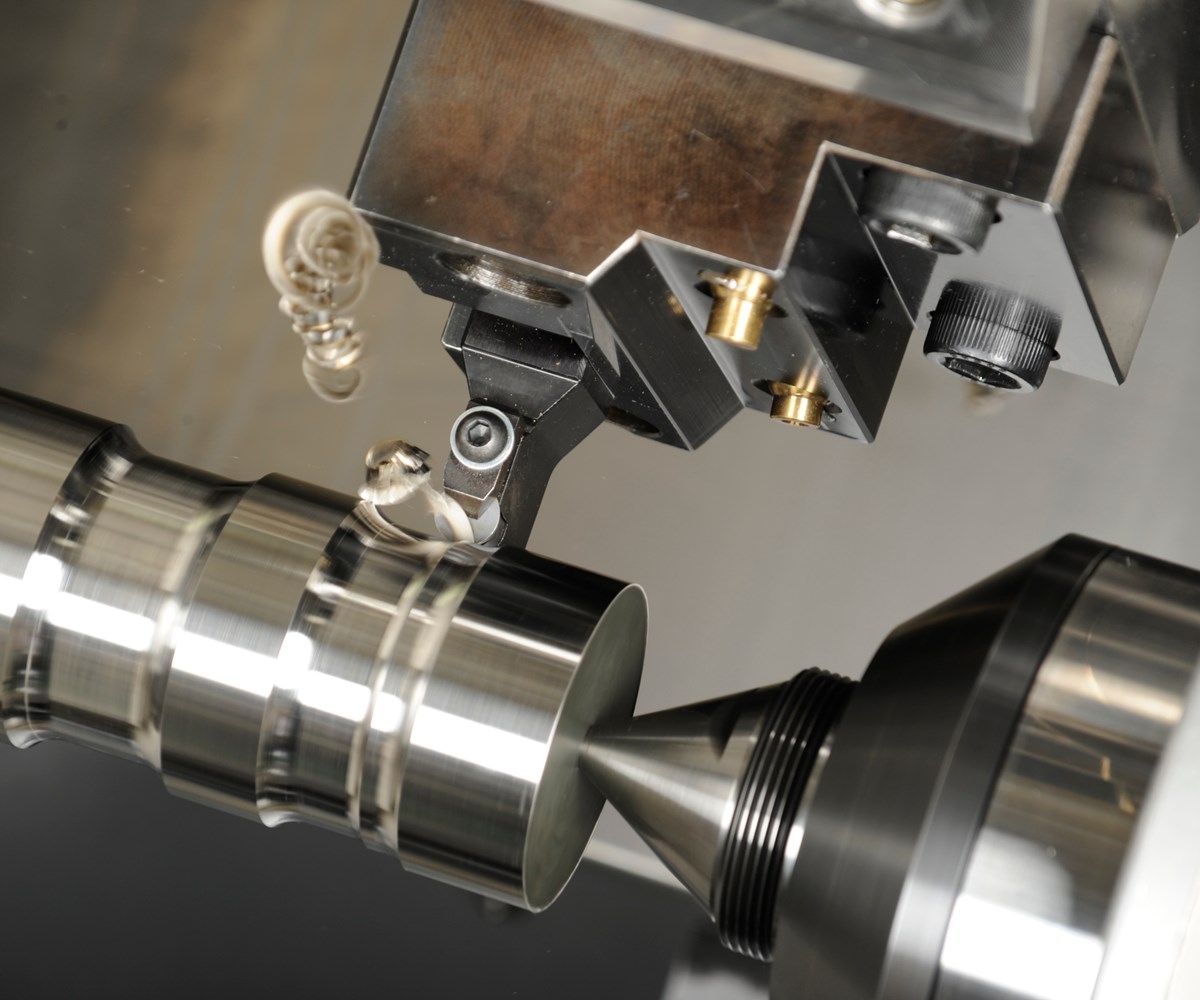
Common Ceramic CNC Machining Techniques
-
Ceramic CNC Milling: Milling is widely used to create complex shapes — pockets, slots, grooves, and slits — from ceramic blanks.
-
Ceramic CNC Cutting / Drilling: For holes, vias, and through-ceramic features, precision drilling or cutting is done using specialized tools.
-
Precision Ceramic Machining: This term often encompasses milling + grinding + lapping to achieve very tight tolerances and surface finishes.
-
Grinding & Polishing: After the bulk of the material is removed by milling, grinding (with diamond wheels) and polishing help achieve final form and surface finish.
Can Ceramic Be Machined?
Yes — ceramic can be machined, but not like metals. The process requires special knowledge of how ceramics behave under cutting: their high hardness and brittleness mean conventional tooling or feeds don’t work. Instead, machinists use diamond tools, carefully control cutting parameters, and often rely on high-precision grinding to finish the part.
Applications of Machined Ceramic Parts
Ceramic CNC machined parts are used in many high-tech, high-demand industries:
-
Aerospace: Ceramic nozzles, fins, or insulators that resist heat and wear.
-
Electronics / Semiconductors: Substrates, insulating parts, vacuum chucks, or wafer carriers.
-
Medical: Biocompatible ceramic components for implants, valves, or diagnostic equipment.
-
Energy / Power: High-temperature components, insulators, or seals made of technical ceramics.
-
Precision Equipment: Ceramic spacers, rings, or sensor parts that require durability and thermal stability.
Why Choose XSTAR for Ceramic CNC Machining
At XSTAR, we bring together our deep CNC machining expertise and a strong commitment to quality to offer ceramic CNC machining that meets your most demanding needs:
-
Material Expertise: We work with alumina, silicon carbide, zirconia, and more — selecting the right ceramic for your application.
-
Advanced Machining Processes: We use modern CNC mills, grinders, drills, and diamond tooling to execute high-precision ceramic machining.
-
Tight Tolerances: Our process control, metrology, and fixturing allow us to deliver parts within very strict dimensional and surface finish specs.
-
Post-Processing Capabilities: After machining, we can polish, lap, or grind parts to achieve required surface quality.
-
Scalable Production: Whether you’re validating a prototype or scaling up for full production, our integrated factory can support your volumes.
-
Reliable Quality: We perform quality inspections on all parts, ensuring batch-to-batch consistency and performance.
If you are looking for precision ceramic machining, or need CNC-machined ceramic parts for your project, XSTAR is your trusted partner. Contact us today with your design files and specifications — we’ll provide a fast, transparent quote and a robust plan to manufacture your ceramic components.
As a combined manufacturing and trading company, we focus on providing professional CNC machining services, especially CNC subcontracting and the precision processing of various metal components. Our machining capabilities cover a wide range of materials, including
CNC aluminum machining,
CNC stainless steel machining,
CNC magnesium machining,
CNC acrylic machining,
CNC ABS machining, and
CNC plastic machining.
We also support precision part production for multiple industries, such as
robot parts machining,
aerospace component machining,
automotive parts machining,
medical parts machining,
and other sectors that require high-accuracy CNC components.
Our CNC services ensure excellent dimensional precision, high processing efficiency, stable quality output, and broad compatibility with different materials. A full set of finishing options is available, including sandblasting, hard anodizing, micro-arc oxidation, grinding, polishing, painting, blackening, electroplating, vacuum coating, electroless plating, phosphating, passivation, silk printing, and surface texturing.
We are a dedicated provider of ceramic cnc machining, offering both prototype and batch CNC manufacturing. If you need a reliable ceramic cnc machining manufacturer or want to request a ceramic cnc machining price, you are welcome to contact us anytime.
