
Acrylic CNC Machining: Precision, Versatility, and Quality with Xstar
What Is Acrylic CNC Machining
Acrylic CNC machining refers to the process of using computer numerical control (CNC) tools to mill, cut, drill, turn, and finish parts made from acrylic (also known as PMMA or plexiglass). This method enables high-precision, repeatable, and complex shapes from acrylic sheets or blocks, which are widely used for optical, structural, and decorative applications.
Because acrylic is relatively brittle and thermally sensitive, CNC machining must carefully control speeds, tool selection, cooling, and cutting strategy to prevent cracking, melting, or internal stress.
Before we begin, if you require a quote for bulk metal part processing, please contact us for a free estimate.
Why Choose Acrylic for CNC Machining
-
Clarity and Optical Quality: Acrylic offers excellent transparency, making it ideal for light guides, lenses, signage, and display panels.
-
Lightweight and Durable: Despite being light, acrylic is stronger and more impact-resistant than glass, yet machinable with precision.
-
Wide Industry Use: From architectural interiors and retail signage to automotive light covers, medical devices, and marine parts, acrylic CNC parts are highly versatile.
-
Cost-Effective Prototyping: Because acrylic CNC machining supports rapid prototyping, it’s a great material for testing design concepts before scaling to production.
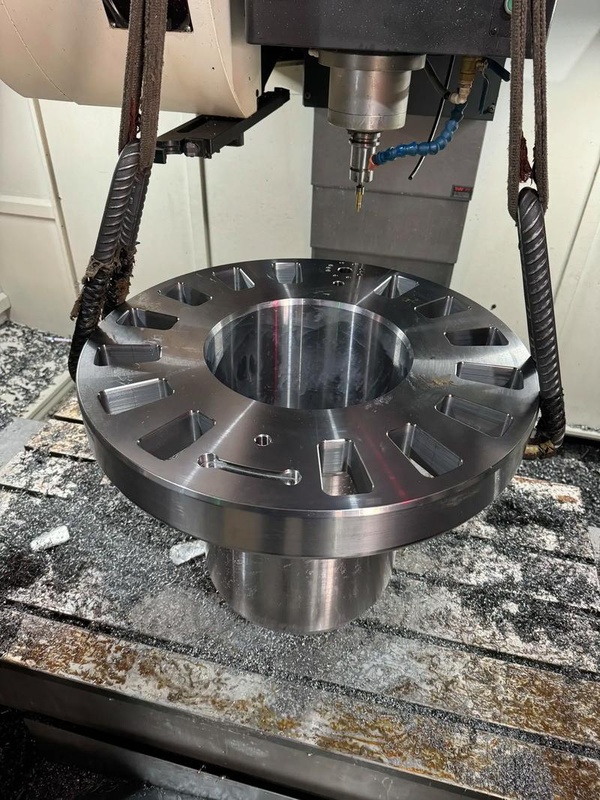
Key Processes in Acrylic CNC Machining
CNC Milling
-
Uses single-flute or low-flute end mills specifically for acrylic.
-
Cuts peripheral features, pockets, slots, and 3D contours.
-
To minimize heat, machines use low cutting depths and careful rake angles.
CNC Turning
-
Acrylic blocks or rods are rotated on a lathe, and single-point cutting tools shape them.
-
Requires lower speeds and optimized tooling to avoid cracking during parting.
Engraving and Cutting
-
Engraving creates decorative or functional etching without physical stress.
-
CNC cutting (versus laser cutting) is ideal for thick acrylic or 3D shapes where router bits provide material removal.
Design Considerations for Acrylic CNC Machining
-
Wall Thickness: Avoid overly thin walls — acrylic can crack under stress. A recommended height-to-thickness ratio is around 10:1.
-
Tool Wear Compensation: As acrylic is machined, tool wear occurs; compensation (e.g., + 0.025 mm) often helps maintain tight tolerances.
-
Feed Rates & Cooling: Use single-flute up-cut bits, lower speeds, and apply air or coolant to avoid melting or stress.
-
Prevent Cracking: Use sharp tools, adjust spindle speed, or choose stress-relieved acrylic to minimize cracking.
Post-Processing Techniques for Acrylic CNC Parts
After machining, acrylic parts often need finishing to meet optical or aesthetic requirements:
-
Flame Polishing: A flame briefly melts the surface to smooth out tool marks, producing a gloss finish.
-
Mechanical Buffing: Sanding followed by buffing gives distortion-free, high-clarity surfaces — perfect for optical parts.
-
Laser Engraving: Adds precise decorative elements, logos, or functional markings with minimal stress.
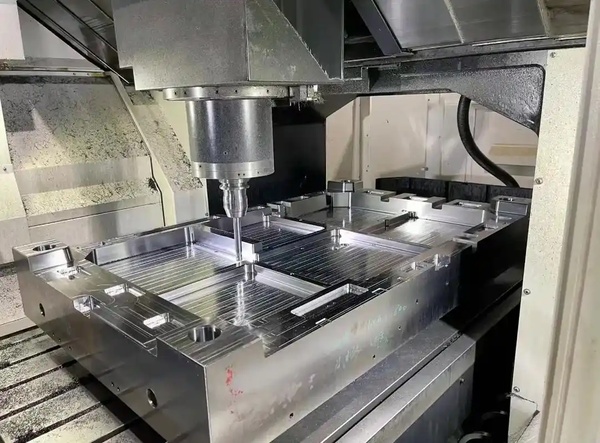
Quality Control and Inspection in Acrylic CNC Machining
Ensuring quality in acrylic CNC-machined parts involves:
-
Dimensional Inspection: Because acrylic expands with temperature, measure in a controlled environment using CMM or optical systems.
-
Surface Clarity Testing: Use visual checks under specific lighting, or spectrophotometry, to ensure no haze, clouding, or polishing imperfections.
-
Stress Analysis: Use polarized-light inspection to detect internal stress caused by machining — annealing can relieve stress if needed.
-
Repeatability: Employ Statistical Process Control (SPC) to monitor tool wear, feed rates, and ambient conditions for consistent batch production.
Cost, Efficiency & Savings
-
Efficient Material Use: By nesting designs and optimizing tool paths, CNC machining reduces acrylic waste.
-
Batch Production: Whether prototype or small production runs, CNC acrylic machining offers a cost-effective way to scale without sacrificing quality.
-
Minimal Scrap: Controlled machining parameters and tool compensation lead to lower defect rates.
Comparison: CNC Cutting Acrylic Sheet vs Other Methods
-
While laser cutting gives polished edges, it’s less suited for very thick acrylic or highly three-dimensional shapes.
-
CNC cutting of acrylic sheet provides mechanical precision, but may require post-polishing.
-
For intricate 3D geometry or high structural stability, CNC is often preferred over molding or simple laser cutting.
Choosing the Right CNC Cutting Acrylic Design
When planning your part:
-
Define Functional Requirements: Do you need optical clarity? Strength? Thickness?
-
Optimize Geometry: Avoid fragile parts; design with proper wall thickness and supports.
-
Choose Acrylic Grade: Cast acrylic, stress-relieved PMMA, or special optical acrylic may be needed.
-
Specify Finish: Decide if you need flame-polished, buffed, or laser-engraved finish.
-
Budget Wisely: Include machining time, post-processing, and quality inspection in cost estimates.
Applications of Acrylic CNC Machining
-
Retail & Signage: Acrylic CNC parts are widely used for illuminated signs, acrylic letters, and display cases.
-
Lighting Fixtures: Panels, diffusers, and light pipes benefit from acrylic’s clarity and diffusion capabilities.
-
Medical Devices: Transparent, biocompatible acrylic is used for lab equipment, enclosures, and microfluidic components.
-
Architectural Design: Acrylic CNC machining supports partitions, decorative panels, and furniture details.
-
Automotive & Optics: Components such as lenses, light covers, and optical parts rely on precision-cut acrylic.
Challenges and How to Overcome Them
-
Melting & Heat: Acrylic chips can melt and stick to the tool if wrong parameters are used. Solution: use proper feed rate, low spindle speed, single-flute bits, and cooling.
-
Cracking: Without proper design, acrylic can crack. Use stress-relieved acrylic, sharper tools, and adjusted spindle speeds.
-
Tool Wear: Tool wear affects tolerances. Compensation strategies and tool monitoring are important.
-
Surface Finish: Machined acrylic often needs post-processing to achieve the desired clarity. Use flame polishing, mechanical buffing, or laser polishing.
Why Choose Xstar for Acrylic CNC Machining
At Xstar, we specialize in high-precision CNC machining services for a wide range of materials — including acrylic. Here’s why we’re your ideal partner for acrylic CNC machining:
-
We have deep expertise in CNC cutting acrylic sheet and complex acrylic part manufacturing.
-
Our engineers design and optimize CNC cutting acrylic design to minimize stress, optimize tool paths, and improve manufacturability.
-
We understand cost dynamics and can offer competitive CNC cutting acrylic sheet price for prototypes, small runs, or production volumes.
-
Post-processing capabilities: flame polishing, mechanical buffing, and laser engraving to deliver optical clarity.
-
Rigorous quality control: dimensional inspection, stress analysis, and consistency across batches.
-
Fast turnaround, high repeatability, and stable quality backed by our integrated trade + manufacturing model.
If you have any needs for acrylic CNC machining, whether it’s cutting simple sheets or crafting intricate CNC-cut acrylic parts, Xstar is ready to deliver. Contact us today for a quote — we look forward to working with you!
We are an integrated trading and manufacturing company specializing in CNC machining services, mainly focused on CNC subcontracting and precision CNC machining of various metal parts. Our capabilities include CNC machining of aluminum profiles, CNC machining of stainless steel, CNC machining of magnesium alloys, CNC machining of acrylic, CNC machining of ABS, and CNC machining of various plastic materials. We provide precision machining for multiple industries, including robotics machining, aerospace components machining, marine components machining, automotive parts machining, medical devices, industrial equipment, and many other fields requiring high-accuracy CNC parts.
Our CNC machining services feature high precision, fast efficiency, stable quality, and strong compatibility. We also support a wide range of post-processing options such as sandblasting, hard anodizing, micro-arc oxidation, grinding, polishing, painting, blackening, electroplating, vacuum plating, electroless plating, phosphating, passivation, silkscreen printing, and texture finishing.
As a professional CNC machining service manufacturer, we offer batch CNC machining services. For inquiries about CNC machining service pricing, feel free to contact us. Additionally, we provide internal link support for {acrylic cnc machining}, acrylic cnc machining manufacturer, and acrylic cnc machining price to help enhance product navigation across the website.
