
Manufacturing of Metal Parts: Processes, Standards, and Industrial Applications
The manufacturing of metal parts plays a vital role in modern industrial production, supporting sectors such as automotive, aerospace, construction, energy, electronics, and industrial equipment. From simple brackets to highly complex precision assemblies, the manufacturing of metal parts enables mass production while ensuring durability, consistency, and functional performance.
With advances in automation, CNC machining, and digital production management, the manufacturing of metal parts has evolved into a highly efficient and scalable discipline. Companies like Xstar combine engineering expertise with modern manufacturing technologies to deliver metal components that meet global quality and compliance standards.
Manufacturing of Metal Parts in Modern Industry
Definition and Scope of Manufacturing of Metal Parts
The manufacturing of metal parts refers to the industrial processes used to transform raw metal materials into finished or semi-finished components. These processes may include machining, forming, casting, stamping, welding, and finishing, depending on the application and material requirements.
The manufacturing of metal parts focuses on achieving dimensional accuracy, mechanical strength, and surface integrity. It supports both high-volume standardized production and low-volume customized manufacturing, making it a cornerstone of industrial supply chains worldwide.
Production of Metal Parts for Scalable Output
The production of metal parts emphasizes efficiency, repeatability, and cost control. This aspect of metal manufacturing is particularly important for industries that require consistent quality across large production runs.
Production of metal parts typically involves optimized workflows, automated machinery, and quality control systems to ensure stable output. Manufacturers rely on production planning, tooling optimization, and process standardization to maintain efficiency while minimizing waste.
Fabrication of Metal Parts for Custom Applications
The fabrication of metal parts focuses on shaping and assembling metal materials into specific forms using cutting, bending, welding, and joining techniques. Fabrication of metal parts is commonly used in construction, infrastructure, machinery, and equipment manufacturing.
This approach allows manufacturers to create customized components and assemblies that meet unique structural or functional requirements. Fabrication of metal parts often complements machining processes to deliver complete solutions.
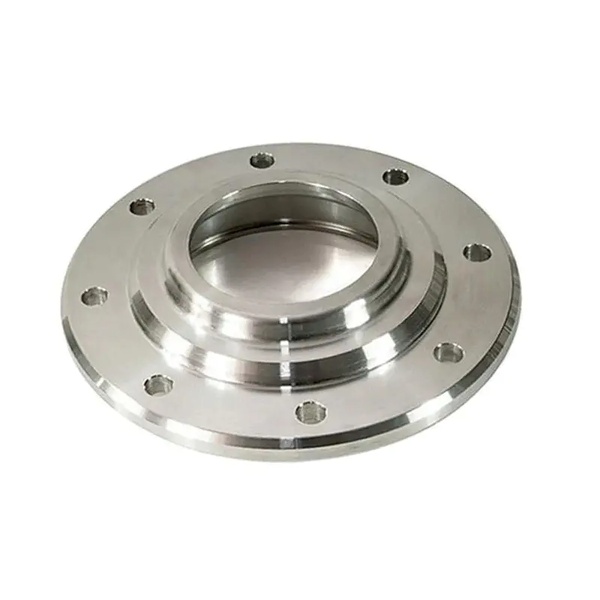
Manufacturing of Steel Parts for Structural Strength
The manufacturing of steel parts is essential for applications requiring high strength, durability, and load-bearing capability. Steel remains one of the most widely used materials in industrial manufacturing due to its versatility and mechanical performance.
Manufacturing of steel parts supports industries such as construction, automotive, energy, and heavy equipment. Through controlled processing and heat treatment, manufacturers ensure steel components meet specific strength and toughness requirements.
Manufacturing of Sheet Metal Parts in Industrial Design
The manufacturing of sheet metal parts involves forming thin metal sheets into functional components using processes such as laser cutting, stamping, bending, and punching. This method is widely used for enclosures, panels, brackets, and housings.
Manufacturing of sheet metal parts enables efficient production of lightweight yet strong components with consistent geometry. It is particularly valuable for electronics, HVAC systems, and industrial cabinets.
Manufacturing of Metal Products Across Industries
The manufacturing of metal products encompasses a broad range of finished goods and components used in various industries. These products may include fasteners, frames, housings, tools, and mechanical assemblies.
Manufacturing of metal products requires coordination between material selection, processing methods, and finishing techniques to ensure functional and aesthetic quality. Manufacturers like Xstar integrate multiple processes to deliver complete metal product solutions.
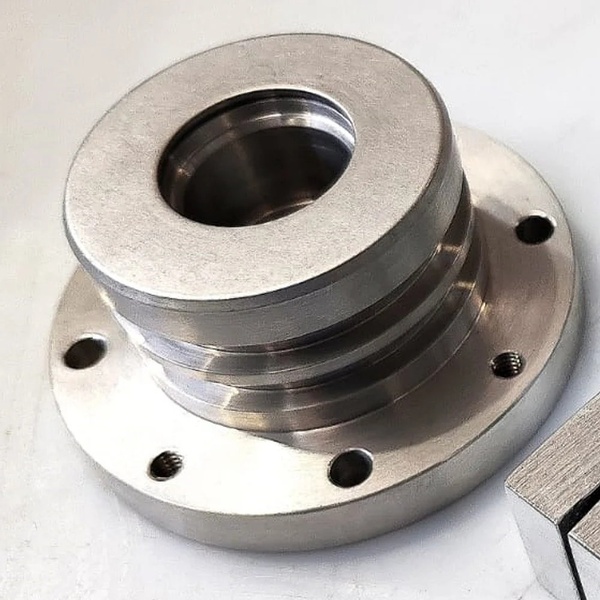
Manufacturing of Metal Products HSN Code Explained
The manufacturing of metal products HSN code is used for classification in international trade and taxation systems. HSN codes help identify metal products for customs documentation, compliance, and reporting purposes.
Understanding the manufacturing of metal products HSN code is essential for exporters, importers, and manufacturers engaged in global trade. Proper classification ensures smooth logistics operations and regulatory compliance.
Manufacturing of Metal Products NIC Code Overview
The manufacturing of metal products NIC code is commonly used for industry classification in business registration and economic analysis. This code categorizes manufacturers based on the type of metal products they produce.
Accurate use of the manufacturing of metal products NIC code supports regulatory filings, statistical reporting, and industry benchmarking. It helps define a company’s operational scope within national manufacturing frameworks.
Manufacturing of Metal Components for Precision Assemblies
The manufacturing of metal components focuses on producing individual parts that integrate into larger assemblies or systems. These components often require tight tolerances and consistent quality to ensure proper fit and function.
Manufacturing of metal components is critical in sectors such as aerospace, medical devices, electronics, and automation. Precision machining and inspection play a central role in achieving the required standards.
Manufactures Metal Parts NAICS Code in Industry Classification
The manufactures metal parts NAICS code is widely used in North America to classify businesses involved in metal part production. This code supports government reporting, market research, and procurement processes.
Understanding the manufactures metal parts NAICS code helps manufacturers align with industry standards and participate in regulated supply chains. It also supports data-driven analysis of manufacturing sectors.
Quality Control in Manufacturing of Metal Parts
Quality assurance is a core element of the manufacturing of metal parts. Inspection processes such as dimensional measurement, material testing, and surface evaluation ensure that parts meet specified requirements.
Modern manufacturing of metal parts integrates quality control throughout the production cycle rather than relying solely on final inspection. This approach reduces defects and improves overall production efficiency.
Materials Used in Manufacturing of Metal Parts
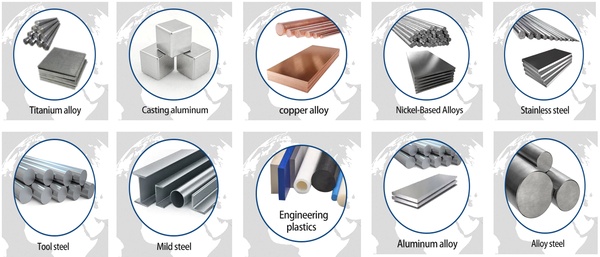
Common materials used in the manufacturing of metal parts include steel, aluminum, stainless steel, copper, brass, and specialized alloys. Material selection depends on mechanical properties, environmental conditions, and application requirements.
By selecting the appropriate material, manufacturers optimize performance, durability, and cost in the manufacturing of metal parts.
Applications of Manufacturing of Metal Parts
The manufacturing of metal parts supports a wide range of applications, including:
-
Automotive structural and drivetrain components
-
Aerospace brackets and housings
-
Industrial machinery and tooling
-
Construction frameworks and supports
-
Electrical enclosures and connectors
These applications highlight the versatility and importance of metal manufacturing in modern industry.
Future Trends in Manufacturing of Metal Parts
The future of the manufacturing of metal parts is shaped by automation, digitalization, and sustainability. Smart factories, real-time monitoring, and data-driven optimization are transforming production environments.
As technology advances, the manufacturing of metal parts will continue to improve efficiency, precision, and environmental performance, supporting evolving industrial demands.
We are an integrated CNC machining service supplier combining manufacturing and trading, mainly engaged in OEM CNC machining and the production of a wide range of custom metal components. With solid experience in manufacturing of metal parts, we provide stable and efficient CNC solutions for global customers.
Our capabilities include CNC machining aluminum profiles, CNC machining stainless steel, CNC machining magnesium alloy, CNC machining acrylic, CNC machining ABS, and CNC machining plastics, covering various metal and plastic raw materials. These services are widely applied in robot parts machining, aerospace parts machining, automotive parts machining, and medical parts machining, meeting the requirements of most CNC precision parts used in industrial fields.
As a professional provider focused on manufacturing of metal parts, our CNC machining services offer high precision, fast turnaround times, consistent quality, and strong process compatibility. To meet different functional and appearance needs, we support a comprehensive range of post-processing solutions, including sandblasting, hard anodizing, micro-arc oxidation, grinding, polishing, spray coating, black oxide treatment, electroplating, vacuum coating, chemical plating, phosphating, passivation, silk screening, knurling, and most common surface finishing techniques.
We are a dedicated CNC machining service factory capable of handling batch production orders. If you are looking for a reliable partner in manufacturing of metal parts or would like to check CNC machining service pricing, please feel free to contact us for more information.
Some content in this article is sourced from the internet. If there is any inappropriate content, please contact us for removal.
