
What Are 5 Axis Metal Machining Services?
5 axis metal machining services are advanced CNC (Computer Numerical Control) machining solutions where the cutting tool and/or the workpiece move along five different axes simultaneously — typically the traditional X, Y, Z linear axes plus two rotational axes (A and B or B and C). This multi-axis motion allows extraordinary precision, complexity, and efficiency when manufacturing metal components that would be difficult or impossible on traditional 3-axis machines.
Precision and Tight Tolerance Capabilities
One of the defining strengths of 5 axis machining services is exceptional precision and tight tolerances. Because the machine can maintain optimal cutting angles and access features from multiple directions in one operation, tolerance levels as tight as ±0.01 mm (±0.0004″) are commonly achievable, which is crucial in industries like aerospace, medical, and automotive.
This level of accuracy helps to eliminate cumulative errors that occur when a part must be repeatedly repositioned between setups, leading to geometric consistency that boosts both performance and quality.
Reduced Setup Time and Faster Throughput
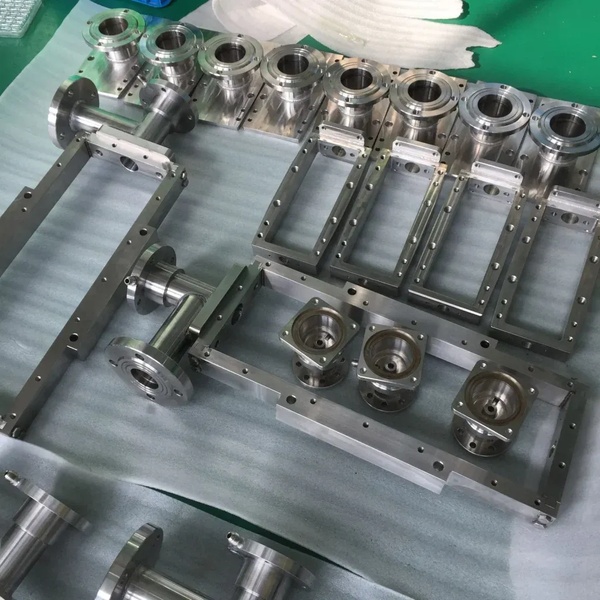
In traditional 3-axis machining, complex geometries often require multiple setups — repositioning and re-clamping the workpiece several times. This adds time and potential error sources. With 5 axis machining, parts can typically be completed in a single setup, drastically reducing setup time and the total production cycle.
For example, aerospace frames with contoured surfaces only need one clamping, which not only speeds up production but also cuts labor costs and reduces the chance of misalignment.
Complex Geometry Machining
One of the hallmark benefits of 5 axis services is the ability to machine complex shapes, contoured surfaces, undercuts, and deep cavities that are otherwise extremely difficult with 3-axis or 4-axis approaches. These include impellers, turbine blades, ergonomic medical parts, and free-form automotive components.
This capacity expands product design possibilities, enabling engineers to optimize performance and reduce weight without compromising manufacturability.
Improved Surface Finish and Less Secondary Work
Because the cutting tool can maintain ideal contact angles throughout the machining process, 5 axis machining often produces superior surface finishes, with fewer tool marks and smoother contours. This reduces or often eliminates the need for secondary finishing operations like grinding or polishing — a major cost and time saver.
In high-precision applications where surface quality affects performance (e.g., aerodynamic parts or medical implants), this advantage is especially valuable.
Versatility Across Materials
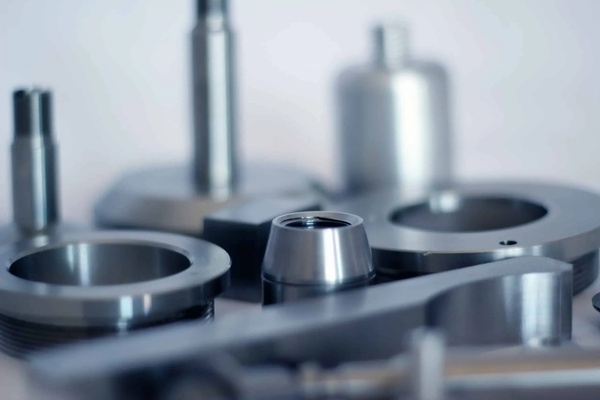
5 axis machining is not limited to a narrow set of materials. It’s highly effective for a wide range of metal and non-metallic materials, including:
| Material | Advantages | Typical Uses |
|---|---|---|
| Aluminum alloys | Lightweight, corrosion resistance | Aerospace and automotive structural parts |
| Steel & stainless steel | Strength, durability | Machine parts, tools |
| Titanium & superalloys | High strength at temp | Jet engine parts |
| Composites & plastics | Non-metal precision parts | Medical and industrial applications |
This versatility allows one machining setup to handle diverse components across industries.
Tool Life and Cost Efficiency
Although 5 axis machines have higher upfront costs compared to 3-axis machines, they offer long-term cost efficiencies. Because they can reduce setups and optimize cutting angles, tools experience less wear and heat stress, leading to longer tool life and less downtime.
Optimized tool paths and shorter cycle times contribute to measurable cost savings — particularly important for medium and high-volume manufacturing runs.
Industrial Applications That Depend on 5 Axis Machining
5 axis metal machining services are leveraged across many high-precision industries, including:
-
Aerospace: turbine blades, structural airframe parts
-
Automotive: engine blocks, suspension components
-
Medical: surgical instruments, implants
-
Defense: precision weapon components
-
Industrial tooling: dies, molds, and special fixtures
Each field demands both geometric complexity and exacting tolerances that standard methods struggle to achieve efficiently.
CAM Programming and Advanced Software
To fully exploit the capabilities of 5 axis machining, manufacturers must use advanced CAM (Computer-Aided Manufacturing) software capable of generating optimized tool paths for multi-axis motion. Sophisticated software — such as HyperMill, NX, or Mastercam — can simulate machine motion and flag potential collisions, making programs safer and production more reliable.
Programming complexity is significantly higher than with 3-axis machining, which is why skilled programmers and simulation tools are critical success factors.
Quality Control and Tolerance Verification
High precision also demands rigorous quality control. 5 axis machined parts are typically measured with coordinate measuring machines (CMMs), optical scanners, and surface roughness testers to verify critical dimensions, surface quality, and tolerance conformance. This ensures that even the most complex features meet design specifications, vital for safety-critical applications like aerospace or medical devices.
Why Xstar Is Your Trusted Partner for 5 Axis Machining Services
When your project demands high precision, complex geometry, and uncompromising quality, Xstar stands out as a top 5 axis metal machining services provider:
-
Advanced 5 axis CNC capability to tackle complex parts in one setup
-
Industry-grade CAM programming expertise for optimized toolpaths
-
Extensive material processing range from aluminum to superalloys
-
Thorough quality control with inspection documentation
-
Competitive cost and lead times, scalable from prototypes to series production
Whether you’re in aerospace, automotive, medical, or industrial tooling, Xstar’s combination of technology and engineering expertise delivers reliable, high-precision components that accelerate your product’s success.
Some content in this article is sourced from the internet. If there is any inappropriate content, please contact us for removal.
