
What Is Low Volume CNC Machining?
Low volume CNC machining refers to producing small quantities of machined parts — typically from 1 to a few thousand units per run — by using computer numerical control (CNC) machines guided by CAD/CAM files.
Unlike mass manufacturing methods that need expensive molds or dies, low volume CNC machining bypasses tooling costs entirely and instead uses digital instructions to drive cutting tools. This makes it a go-to choice for prototypes, initial production runs, custom parts, or test batches.
Cost Efficiency Compared to High-Volume Methods
One of the biggest strategic advantages of low volume CNC machining is lower upfront cost. Industries that produce only a few hundred parts avoid the high tooling investments required for injection molding or die casting.
| Metric | Low-Volume CNC Machining | Mass Production |
|---|---|---|
| Tooling Cost | Minimal | High |
| Setup Time | Quick | Long |
| Unit Cost | Higher | Lower for large batches |
| Lead Time | Fast | Slow for tooling creation |
This makes CNC especially cost-effective for pilot runs and projects where uncertainty remains about final design or market demand.
Precision and Quality Control in Small Batches
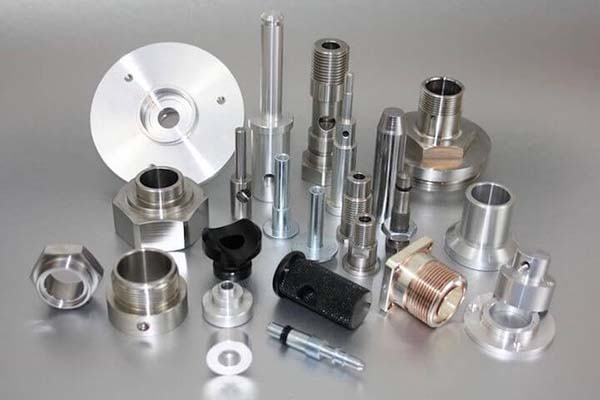
CNC machining is inherently precise because the cutting path follows digital instructions exactly. Even in low quantities, machines can achieve tight tolerances, often down to ±0.001 inches (±0.025 mm) or better, depending on the supplier and material.
This consistency ensures that each part, whether one or 100, meets design specifications — crucial for industries like aerospace, medical devices, or automotive systems where part function is safety-critical.
Materials and Mechanical Performance Options
A major strength of CNC machining is that it works with a wide variety of materials — metals like aluminum, stainless steel, brass, and titanium as well as engineering plastics including PEEK, Delrin, and ABS.
This means prototypes produced through low volume CNC truly represent final product performance in terms of strength, heat resistance, and wear behavior — unlike some additive manufacturing parts whose mechanical properties differ significantly from production materials.
Rapid Lead Times and Market Responsiveness
Because CNC machining doesn’t depend on tooling creation, part production can start within days after design finalization. Many shops deliver low volume runs in 3–10 business days, depending on complexity.
By shortening time to market, businesses can launch products, collect user feedback, or iterate designs far faster than with traditional high-volume methods.
Design Flexibility and Iteration
Low volume CNC machining supports frequent design changes without penalty. Instead of redesigning molds or tooling, engineers simply revise the CAD model, upload to CAM, and reprogram the CNC machine — a process that costs far less and takes far less time.
This flexibility is ideal for sectors where innovation cycles are rapid, such as consumer electronics, robotics, and medical equipment development.
Prototyping and Product Development
In product development, it’s common to go through multiple iterations. CNC machining enables functional prototypes that use the real materials and tolerances expected in production — unlike some rapid prototyping techniques that create lower-strength parts.
For example, a robotics company might use low volume CNC machining to create 100 functional aluminum parts for field testing before deciding on mass manufacturing — saving both time and risk.
Reducing Waste and Improving Sustainability
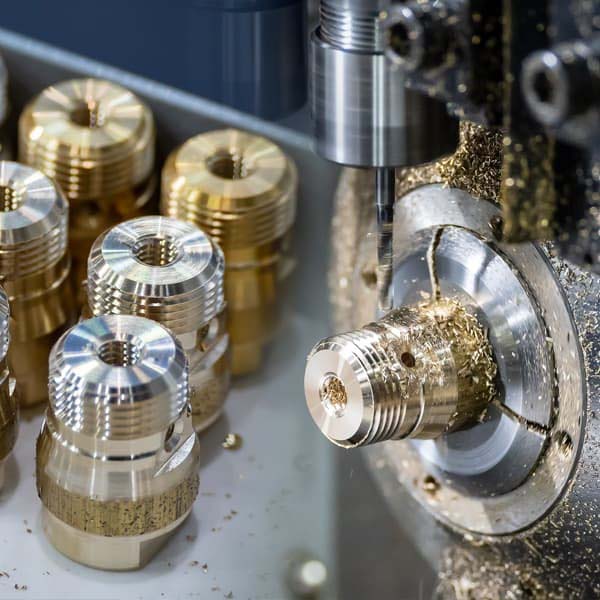
CNC machining’s automated toolpaths optimize material removal, which reduces scrap compared to manual machining or trial-and-error cutting.
While manufacturing always produces some waste, efficient planning and nesting strategies can cut unnecessary use of raw material — important when working with expensive metals.
Design Tips for Cost and Manufacturability
Design plays a significant role in manufacturability and cost. Some proven tips include:
-
Simplify geometry: Minimize unnecessary curves or deep cavities.
-
Use realistic tolerances: Only specify tight tolerances where function demands.
-
Select machinable materials: Aluminum and brass are easier and faster to machine than titanium.
Good design not only shortens machining time but also reduces tool wear and eliminates secondary operations.
Post-Processing and Finishing Options
Low volume CNC machining doesn’t stop at cutting metal. Many suppliers offer finishing services such as:
-
Anodizing
-
Powder coating
-
Plating
-
Heat treatment
These add surface protection, improve aesthetics, and enhance part functionality. Some finishes can also impact corrosion resistance or wear behavior, making them critical for final part performance.
Quality Management and Inspection Systems
In low volume production, every part matters — there’s no “bulk averaging out” as in mass production. So rigorous quality control is essential.
This can include:
-
In-process inspection
-
Final dimensional verification
-
Documentation of tolerances
-
Sampling plans
Such systems ensure that every batch meets standards and reduces the risk of costly rework or returns.
Why Xstar Is a Smart Choice for Your Low Volume CNC Needs
For businesses seeking reliable low volume CNC machining with high precision, fast lead times, advanced quality control, and excellent material flexibility, Xstar stands out for several reasons:
-
Expert design support to optimize parts for CNC production
-
Quick turnaround — often within days for small batches
-
Support across materials from engineering plastics to aerospace metals
-
Rigorous inspection to ensure parts consistently meet tight tolerances
Whether you’re prototyping your next innovation or producing initial batches of end-use parts, Xstar blends speed, precision, and cost efficiency to help you achieve results — without the overhead of traditional mass manufacturing.
Some content in this article is sourced from the internet. If there is any inappropriate content, please contact us for removal.
