
CNC Machining Medical: Enabling Next-Generation Healthcare Manufacturing
In the modern age of advanced healthcare, the term CNC machining medical has become central to how we manufacture critical devices and implants. From surgical tools to bespoke implants, CNC machining empowers the medical sector to deliver parts with exceptional accuracy, biocompatibility and safety. In this article, we explore how CNC machining supports the manufacturing of medical technology, the importance of precision, and how companies like Xstar set new standards in the field.
Why CNC Machining Medical Matters
The medical industry demands components where failure is simply not an option. When we talk about CNC machining medical, we refer to computer‐numerical‐control (CNC) processes applied to medical device manufacturing. These processes ensure high repeatability, tight tolerances, and complex geometry — all of which are essential in environments where patient safety and regulatory compliance are paramount.
For instance, when a surgical instrument or implant must fit precisely and reliably inside the human body, only a manufacturing method such as CNC machining can meet the rigorous demands of size, surface finish, and material compatibility. Moreover, in a medical environment, CNC machining health and safety concerns are especially heightened: machines must operate in clean, controlled environments, materials must meet biocompatible standards, and quality assurance must be traceable.
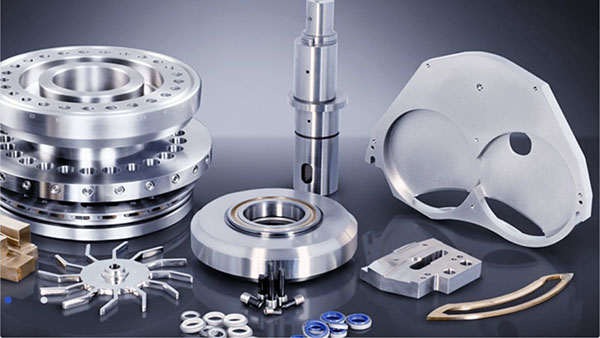
The Role of CNC Machining Medical Parts in Device Manufacturing
When a medical OEM commissions the manufacture of CNC machining medical parts, what do they expect? These parts span a wide range: implants (hip, knee, dental), surgical tools, housings for diagnostic equipment, and more. As one review puts it: “CNC machining can produce high-grade surgical instruments… even devices that are surgically implanted into patients.”
For example, typical materials include titanium for implants, stainless steel for surgical tools, and biocompatible plastics for device housings. CNC machining allows the manufacture of extremely fine features, smooth surfaces, and consistent production runs.
Precision Machining Medical Device: The Heart of Quality
In the medical world, the phrase precision machining medical device signals more than just tight tolerances: it encompasses regulatory compliance, material traceability, and process verification. For instance, precision machining enables custom implants based on a patient’s MRI or CT data, and ensures each part meets micron‐level accuracy.
Manufacturers of medical devices expect the same part produced thousands of times to have virtually no variation — that’s where the benefits of repeatability and automation from CNC machining matter most. The process also supports rapid prototyping and low-volume production runs for new devices, meaning medical device OEMs can go to market faster with confidence.

CNC Machining Medical Components: Bridging Function and Form
When we talk of CNC machining medical components, we refer to the smaller pieces that make up the larger system: the screws, housings, micro‐gears, probes and other parts that integrate into a medical device. These components often require multi-axis machining, micromachining, and critical surface finishes.
For example, components for imaging equipment such as MRI tables, collimators for X-ray, and blood‐gas analyzers are all manufactured using CNC machining for medical components with extremely tight tolerances and complex geometry.
Precision Machining Medical: Meeting Regulatory & Safety Demands
Precision machining in the medical sector requires more than just good machines and tooling. It requires a controlled environment, stringent process controls, and compliance with standards like ISO 13485 and FDA requirements.The phrase precision machining medical therefore encapsulates manufacturing systems that prioritize safety, traceability, and consistent performance.
Furthermore, the concept of CNC machining health and safety highlights the importance of machine processes that minimise contamination, enable sterilisation, and operate in cleanroom environments where required.
CNC Machining for Medical Industry: Application Spectrum
The phrase CNC machining for medical industry captures the broader view: the entire ecosystem in which CNC machining supports medical manufacturing. This includes:
-
Surgical instrumentation manufacturing (forceps, clamps, scissors) where repeatability and finish matter.
-
Implants and orthopedic devices such as hip and knee replacements made via CNC machining medical parts or components.
-
Diagnostic and imaging equipment components that require high precision, clean surfaces, and durable materials.
-
Rapid prototyping and low-volume production of medical devices where CNC machining delivers both speed and precision.
For a company like Xstar, engaging in CNC machining for the medical industry means they must maintain tight tolerance machining centres, robust quality systems, cleanroom or controlled environment manufacturing, and material expertise spanning titanium alloys, stainless steels and biocompatible plastics.
CNC Medical Manufacturing: The Strategic Edge
Finally, CNC medical manufacturing refers to the full workflow—from design, machine programming, production, inspection, to delivery—tailored for the medical sector. When a company like Xstar engages in CNC medical manufacturing, they are partnering with device developers and OEMs to bring high‐risk, high‐value parts into production under stringent regulatory oversight.
Advantages of a strong CNC medical manufacturing capability include:
-
Ability to deliver consistent, high accuracy parts even at small volumes or unique geometries.
-
Material versatility — including biocompatible metals and plastics suited for sterilisation, implants, housings.
-
Compliance with industry standards.
-
Rapid prototyping through to production-scale runs: reducing product time-to-market.
In summary, CNC medical manufacturing is a key enabler for the next generation of medical devices: personalised implants, minimally invasive surgical tools, compact diagnostic devices, and wearable health devices.
Closing Thoughts
In closing, the phrase CNC machining medical is more than a technical term — it is the backbone of modern medical device manufacturing. When we talk about CNC machining medical parts, CNC machining medical components, precision machining medical device, precision machining medical, CNC machining health and safety, CNC machining for medical industry, or CNC medical manufacturing, we are describing a comprehensive manufacturing framework that spans design, production, and regulatory compliance.
For companies like Xstar, embracing this framework means delivering parts that don’t just meet dimension drawings, but also meet the demands of safety, biocompatibility, performance and market delivery. As medical technologies evolve — more personalised, smaller, more connected — CNC machining will continue to play a critical role in enabling those innovations.
Some content in this article is sourced from the internet. If there is any inappropriate content, please contact us for removal.
