
The Role of Medical CNC Machining in Modern Healthcare
In today’s fast-evolving healthcare landscape, medical CNC machining has emerged as a cornerstone for producing high-precision components that drive innovation in medical devices and implants. Companies like Xstar rely on advanced equipment and skilled operators to deliver machining that meets the strict demands of the industry. This article explores how medical precision machining supports device manufacturers, the typical use cases for medical device CNC machining, and how CNC medical manufacturing translates design concepts into life-saving products.
What Is a CNC in the Medical Field?
To understand the importance of what is a CNC in the medical field, we must recognize that CNC stands for Computer Numerical Control — a process by which computer software drives machine tools to remove material with exacting tolerance. In a medical context, the margin for error is minimal: a misaligned implant, or a surgical tool with improper dimensions, might compromise patient safety. Thus, CNC machining medical parts offers the repeatability and precision required for biomedical applications.
Applications for CNC Machining Medical Components
The application of CNC machining medical components spans a wide spectrum:
-
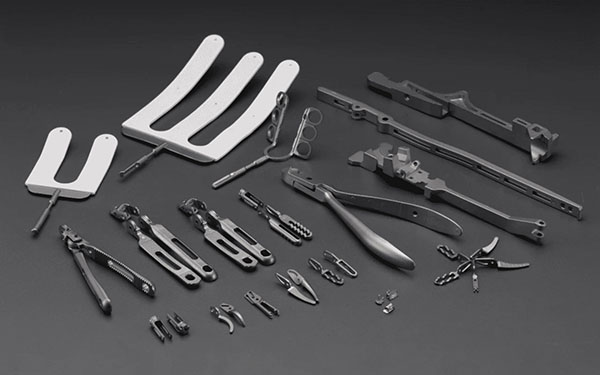
Surgical instruments: From the delicate tips of forceps and retractors to custom endoscopic tools, medical device CNC machining enables complex geometries and smooth surfaces.
-
Implants and prosthetics: Using titanium or cobalt-chrome alloys, CNC machines precisely machine screws, rods, plates, and joint replacements. These parts, produced via medical precision machining, must fit within the body and last for years.
-
Device housings and diagnostic equipment parts: The outer shells, internal brackets, connectors, and custom enclosures used in MRI, CT, monitoring devices, and wearables are often the result of CNC medical manufacturing processes.
-
Rapid prototyping and low-volume production: Before full-scale manufacturing, devices often go through iterations. CNC machining medical parts allows device developers to test, validate, and refine components fast.
From Milling to Turning — CNC Milling and Turning Near Me
Whether you need cnc milling and turning near me or are working with a global supplier, the fundamentals remain the same. Milling operations remove material via rotary cutters; turning uses lathes to rotate the workpiece against the tool. For example, medical device CNC machining might use milling to sculpt an implant surface and turning for a cylindrical screw or rod.
Locating a nearby facility offering CNC machining medical components can reduce lead time and improve communication for urgent prototypes or low-volume production.
Key Benefits of Medical CNC Machining
Employing medical CNC machining and associated processes like medical precision machining brings a set of tangible benefits:
-
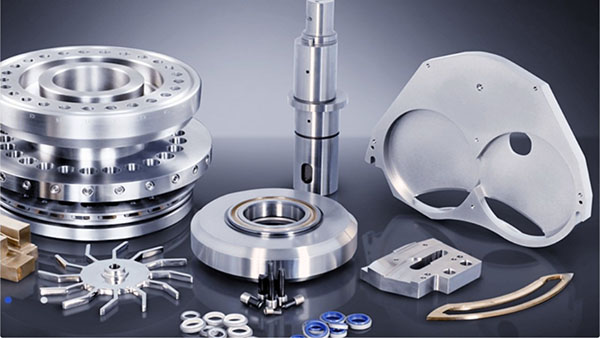
Accuracy and repeatability: The ability to hold tight tolerances across batches helps ensure every part functions correctly.
-
Complex geometry and miniaturization: With advances in Swiss-style and multi-axis machines, manufacturers can produce intricate parts such as micro-screws or catheter heads.
-
Material versatility: From titanium and stainless steel to high-performance plastics, CNC processes support the materials common in medical devices.
-
Faster time to market: With rapid prototyping and early production capabilities, device manufacturers can accelerate development.
-
Regulatory compliance support: Firms focused on cnc medical manufacturing are often certified (e.g., ISO 13485) and equipped for the strict inspections and documentation required in the medical field.
Challenges and Considerations
However, leveraging CNC machining medical parts and medical device CNC machining is not without its challenges:
-
Equipment and tooling cost: High-precision machines, clean rooms, and temperature-controlled environments raise capital and operational costs.
-
Material machinability: Exotic materials like certain titanium alloys or biocompatible plastics may require special cutting tools, coolants or processing methods.
-
Certification and documentation: Every step — from material traceability to post-processing and inspection — must comply with regulatory standards when using medical CNC machining.
-
Supply chain and lead time: Even though CNC offers speed, scheduling, fixture design, tool changes, and setup can still lengthen lead time for cnc machining medical components.
Best Practices for Choosing a Medical CNC Machining Partner
If your company (e.g., Xstar) is sourcing medical device CNC machining services, here are some best practice tips:
-
Verify that the supplier holds certifications like ISO 13485, understands traceability, and documents quality control.
-
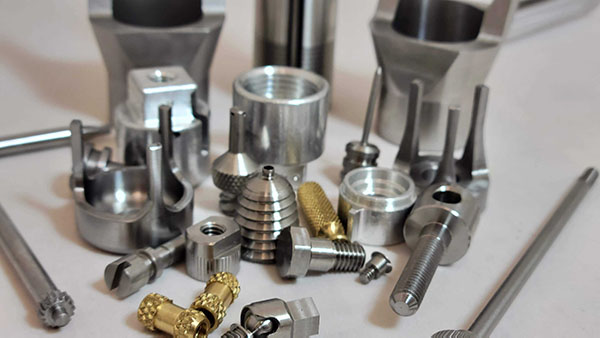
Ask for examples of cnc medical manufacturing they have done: implants, surgical instruments, diagnostic device parts.
-
Confirm the materials they machine (titanium, stainless steel, PEEK, etc.) and the tolerances they can meet.
-
Visit or review their facility to see temperature control, dust control, inspection rooms.
-
Ensure communication lines are clear: from prototype to production, you want a partner experienced in both medical CNC machining and scaling up volumes.
Future Trends in Medical CNC Machining
Looking ahead, the field of cnc machining medical parts is evolving:
-
Micromachining and miniaturization will continue to grow as devices shrink in size but increase in functionality.
-
Integration of additive manufacturing (3D printing) with CNC finishing — hybrid processes where medical device CNC machining provides the high-precision final touches.
-
Increased automation and digital twins for faster iteration and lower cost of cnc medical manufacturing.
-
Better material innovations — new biocompatible alloys or composites that demand advanced machining strategies.
In summary, medical CNC machining is a mission-critical process in the production of modern medical devices and components. From medical precision machining of implants and instruments to full-scale medical device CNC machining, the precision, repeatability and flexibility of CNC processes are indispensable. When you engage with cnc medical manufacturing, whether you are sourcing for cnc machining medical parts or complex cnc machining medical components, you must understand what is at stake: patient safety, regulatory compliance, and device performance. By choosing a capable partner and staying aligned with best practices, your engineering efforts (for instance, at Xstar) can translate into high-quality medical products with confidence.
We are a combined trading-and-manufacturing company specializing in CNC machining services, primarily focusing on outsourced CNC production and the machining of various metal components. Our capabilities include machining for aluminum profiles, stainless steel, magnesium alloys, acrylic, ABS materials, and multiple plastic raw materials. We also handle precision component manufacturing for robotics, aerospace parts processing aerospace components machining, marine applications, automotive parts machining, medical parts machining, and a wide range of industrial CNC applications.
Our CNC machining services deliver high precision, fast production speed, stable quality, and excellent compatibility with diverse materials. We support nearly all major post-processing technologies, including sandblasting, hard anodizing, micro-arc oxidation, grinding, polishing, painting, blackening, electroplating, vacuum plating, chemical plating, phosphating, passivation, silk-screen printing, and texture etching.
As a professional CNC machining service manufacturer, we provide both prototype and batch CNC machining solutions. For inquiries about CNC machining service pricing, feel free to contact us.
We also support localized pages such as medical CNC machining, medical CNC machining manufacturer, and medical CNC machining price to meet more specialized needs in the medical field.
Some content in this article is sourced from the internet. If there is any inappropriate content, please contact us for removal.
